 Skip to content

// Case
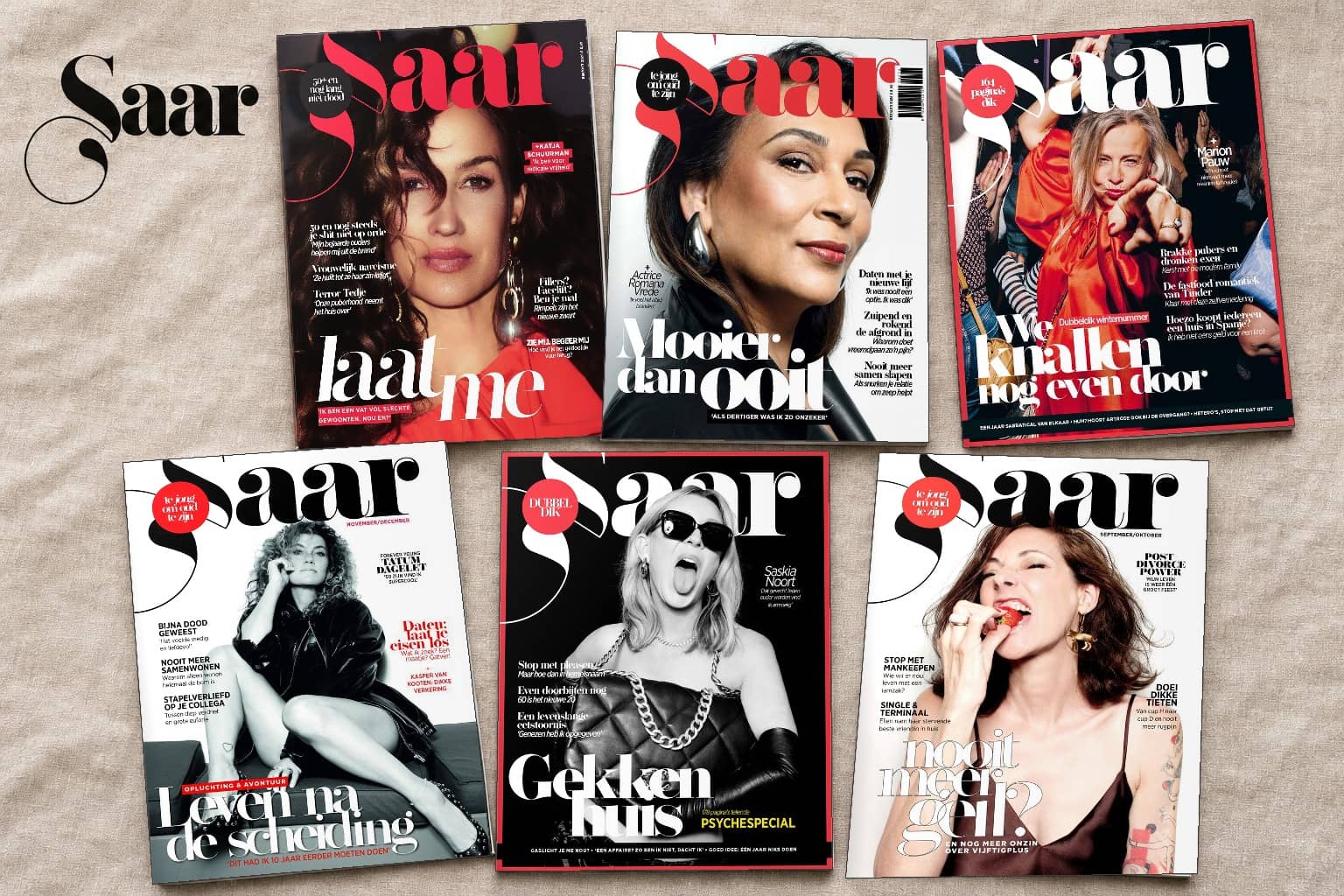
Saar magazine
From a solid base to almost twice as many new subscribers per day.
+85%
Signups per day
May to Sep 2026 vs. Oct to Dec 2025
-24%
Cost per registration
same periods, Meta and Google together
+198%
Enrolments in one month
May vs. April 2026, with a fifth more budget
Sector
Media and publishing
Duration
since 2024, continuously
In association with
Snippet Media
// The story
About Saar magazine
Saar magazine is the magazine for women aged 50+, published by Snippet Media in Amsterdam. In addition to the magazine, Saar also produces a podcast. New readers subscribe via the website.
The challenge
Since 2024, we have been working with the Saar team to recruit subscribers through Meta and Google. After training on both platforms, the team creates the ads themselves; we provide guidance. This laid a solid foundation: campaigns that generated new subscribers every day.
The next step was scaling up. That’s more difficult than it sounds. More budget means the algorithm has to look further than the people who are most likely to become subscribers, and then the costs per subscriber quickly mount up. In the spring of 2026, exactly that happened. The question was how Saar could grow without the costs per subscriber spiraling out of control.
The insight
More budget only leads to more subscribers if the algorithm knows exactly who a good subscriber is.
The approach
The approach took three paths.
The team at the helm. The Saar team creates and places the ads themselves. We oversee the campaign structure, allocate the budget, and provide support.
A structure that grows with you. A traffic campaign with articles creates the first contact moments with new readers. The conversion campaign then prompts the subscription, even among those who have already read an article.
In the beginning, all ads in that one conversion campaign worked, and Meta itself decided which ones worked and which ones didn’t. That worked well, but the further we scaled up, the more difficult it became for Meta to find new subscribers, and the broader the search would become. That’s why new ads are now given their own test set first. Only when they prove that they work will they be added to the campaign that scales up. This ensures a constant supply of new ads without disrupting the most successful campaign. The budget was increased gradually, as long as the costs per subscriber remained within the limits.
Clear signals. We made sure that Meta received every sign-up through multiple channels: the pixel, the Conversions API, and offline conversions. This way, the algorithm learns from real subscribers, and it finds more people who seem like them.
The result
In May 2026, there were almost three times as many registrations as in April, with a fifth higher budget. After that, the scale was further expanded.
From May to September, there were an average of 85% more registrations per day than at the end of 2025, with 24% lower costs per registration. The share of paid registrations remained consistently high, between 80 and 86%. And the Saar team still creates the ads itself.
marketing psychology
Figures with context (a period, a comparison) feel more reliable than bare percentages. That is why the source of each result is stated underneath it.


 Dutch
 English